.avif)
From a “Used” Dress, Joy Is Born: The Story of Gaza’s Brides
In a small room barely surviving the darkness of repeated power outages, Nisreen Al-Rantisi sits before an old sewing machine, moving it silently with hands that resemble patience itself. Around her, faded wedding dresses are piled high — gowns that have lost their shine through years and war. But to her, they are not merely used fabrics; they are postponed dreams she is trying to give a second chance at life.
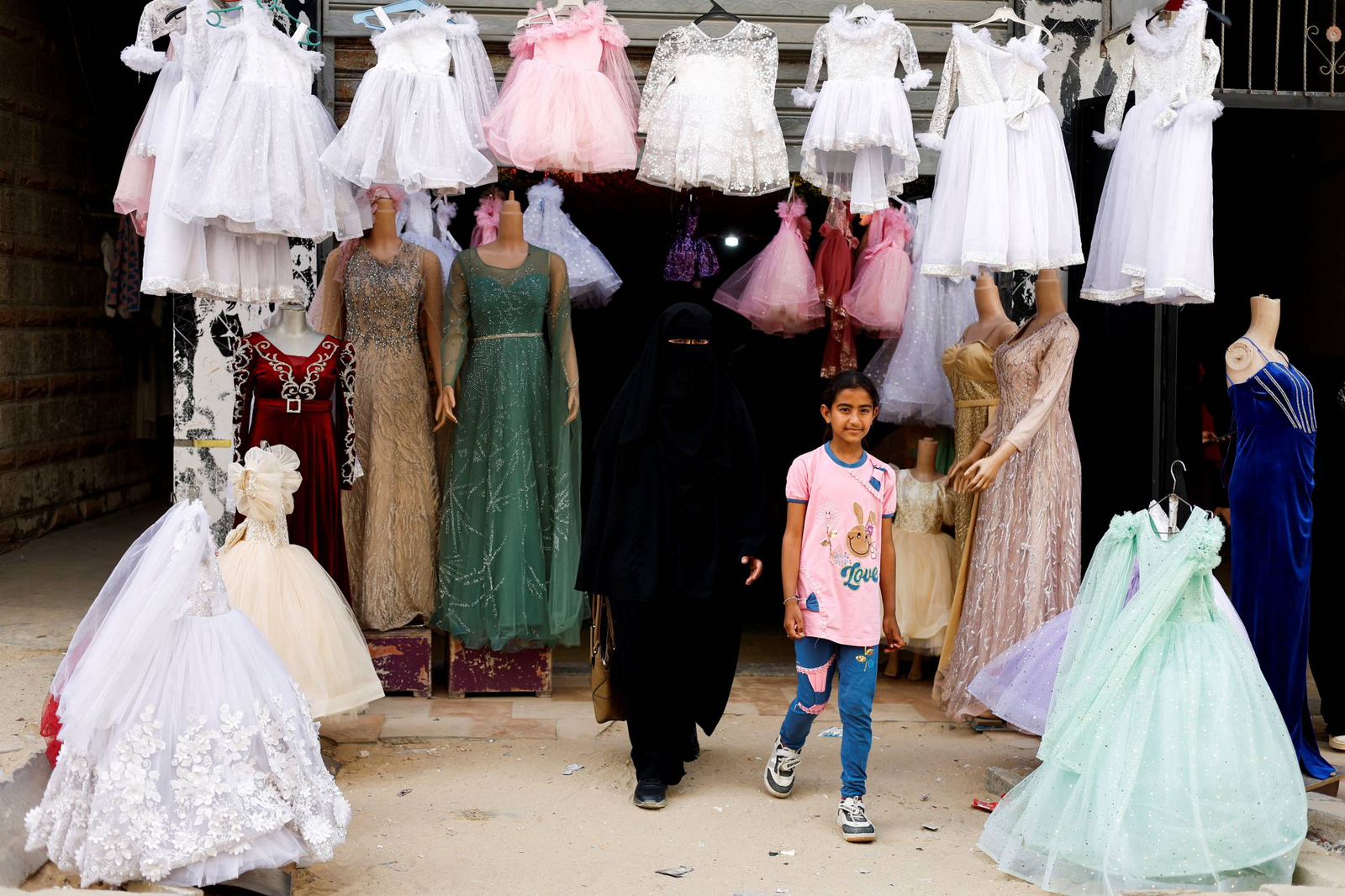
Nisreen carefully examines one of the dresses, undoing its old threads before embroidering it again piece by piece, as if she were stitching hope itself. She says that many brides in Gaza can no longer afford to buy a new wedding dress after prices rose beyond the reach of families already burdened by war, poverty, and displacement.
As a result, worn-out dresses have become the only refuge for brides trying to hold on to a small moment of happiness amid all the devastation.
Before the war, buying fabric was an ordinary matter. Today, it has become a distant luxury. Prices have multiplied many times over, and the electricity that once helped her complete her work disappears for long hours, forcing her to return to manual sewing machines. Despite the exhaustion, she continues working because behind every dress is the story of a young woman waiting for her wedding day with both excitement and fear.
Among those stories stands Shahd Fayez, a 21-year-old bride only days away from her wedding. She moves between bridal shops with tired eyes, searching for a dress that resembles her simple dreams, only to be met with soaring prices and limited choices. In a voice that conceals deep disappointment, she says that the cheapest wedding dress costs more than one thousand dollars, while her family barely possesses enough money to secure life’s basic necessities.
Yet despite everything, Shahd has not abandoned her dream. Like many young people in Gaza, she clings to the idea of marriage as a small victory for life in the face of war. There may be no grand celebration and no luxurious gown, but simply wearing a white dress — even one that has been restored and reused — feels like a declaration of people’s ability to survive and to create joy from the heart of pain.
In Gaza, recycled wedding dresses are no longer merely an economic solution. They have become witnesses to stories of human resilience, where women, with simple threads and old sewing machines, try to protect what remains of people’s dreams.