.avif)
When a Place Defeated Destruction: “Beit Al-Daya” Tells Gaza’s Story of Resilience
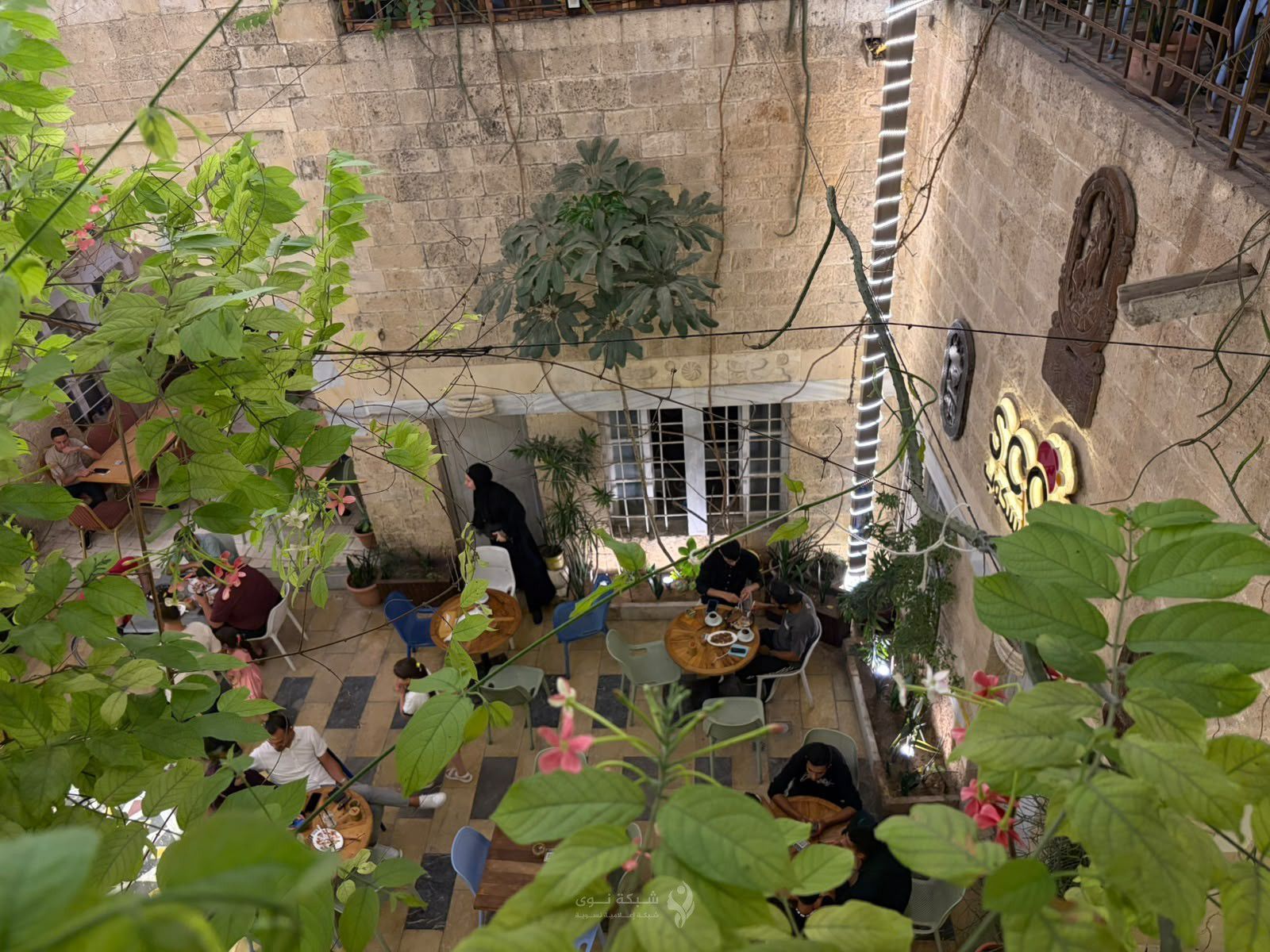
In one of the narrow alleys of Gaza City’s Old Town, the voices of visitors echo between ancient stone walls, while rays of sunlight dance across arches that have withstood centuries of time.
There stands *Beit Al-Daya*—not merely a historic building that survived the war, but a living witness to the memory of a city still searching for life amid the rubble.
When *Suhad Sbeih* stepped inside the house for the first time, she felt as though she had crossed a gateway through time, transported back centuries. She gazed at the old sandstone walls and paused beside the small water basin at the center of the courtyard. Around it, mint and basil plants spread their fragrance, filling the air with a scent that felt like nostalgia itself.
Suhad says her amazement was not only with the place, but with the feeling that overwhelmed her as she sat beneath the Ottoman-style arcade. For a few moments, she forgot the sounds of war and its lingering scars, feeling as though she had stepped into a scene from an old Damascene house she had once seen in television dramas.
“The place gave me something we have missed for a very long time... peace,” she says with a gentle smile.
Hundreds of years ago, Beit Al-Daya was built as one of Gaza’s most prominent historic homes. Through countless eras and transformations, it remained standing despite the wars and destruction that struck the city. Today, it has reopened its doors in a new form—not simply as a heritage site, but as a restaurant that welcomes people within its ancient walls and offers them an opportunity to reconnect with life amid the memory of the place.
For *Ahmed Abu Al-Qambaz*, manager of the restaurant “Scoop,” the project is far more than an investment or a commercial venture. His greatest challenge was ensuring that the spirit of the house remained present in every corner.
Every stone carries a story, and every arch preserves a piece of Gaza’s history. Despite the difficulties of restoration, the scarcity of resources, and the marks left by shrapnel on the walls, determination proved stronger than every obstacle.
As evening falls, the house’s corridors fill with visitors. Some come to enjoy a meal, while others simply sit among the old walls, admiring their intricate details. Each person is searching for something different—a moment of calm, a beautiful photograph, or perhaps the reassurance that the city is still capable of preserving its beauty despite everything it has endured.
Heritage experts say that historic buildings preserve not only stones, but also the memories of people. Today, Beit Al-Daya does both: it safeguards a history that spans centuries while offering Gaza’s residents a space where they can breathe hope once again.
In a city exhausted by war, Beit Al-Daya seems to be more than just a historic building. It is a silent message that life can grow through the cracks, and that history does not live only in books, but also in places that continue to welcome people and bring them together around a single table—despite everything.